Product Details
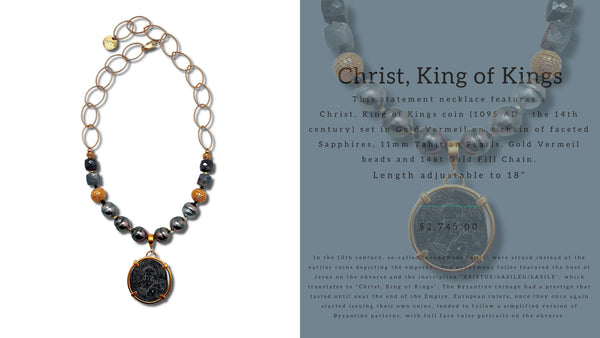
Unapologetically opulent and steeped in a thousand years of history, this handcrafted masterpiece is designed for the woman who lives for the extraordinary. At its center sits a breathtaking 10th-century "Christ, King of Kings" coin, radiating in a rich gold vermeil setting. This isn't just a necklace; it’s a wearable icon—a fusion of spiritual depth, ancient heritage, and high-fashion allure.
With its bold palette and rare materials, this 21-inch statement piece is for the collector who isn't afraid to stand out and lead with grace.
The Design Details:
Ancient Iconography: A museum-quality "Christ, King of Kings" coin (circa 10th Century) serves as a soulful, gold-framed focal point.
Tahitian Elegance: Substantial 11mm Tahitian pearls offer a moody, iridescent luster that perfectly balances the warmth of the gold vermeil accents.
Prismatic Earth Tones: Strands of faceted sapphires in rich, organic hues add a sophisticated shimmer and a layer of refined texture.
Luxe Versatility: Thoughtfully designed with a 14kt gold-fill lobster clasp and an adjustable length up to 21 inches, allowing you to customize the drop for any neckline.
Spiritual Sophistication: A seamless blend of faith and fashion that serves as a powerful symbol of individuality and refined taste.
Certified Authentic: Your one-of-a-kind treasure is accompanied by professional numismatic certification, ensuring the legacy of your coin is fully authenticated.
* In the 10th century, so-called “anonymous folles” were struck instead of the earlier coins depicting the emperor. The anonymous folles featured the bust of Jesus on the obverse and the inscription “XRISTUS/bASILEU/bASILE”, which translates to “Christ, King of Kings”. The Byzantine coinage had a prestige that lasted until near the end of the Empire. European rulers, once they once again started issuing their own coins, tended to follow a simplified version of Byzantine patterns, with full face ruler portraits on the obverse.







Connect